
What Is Suya?
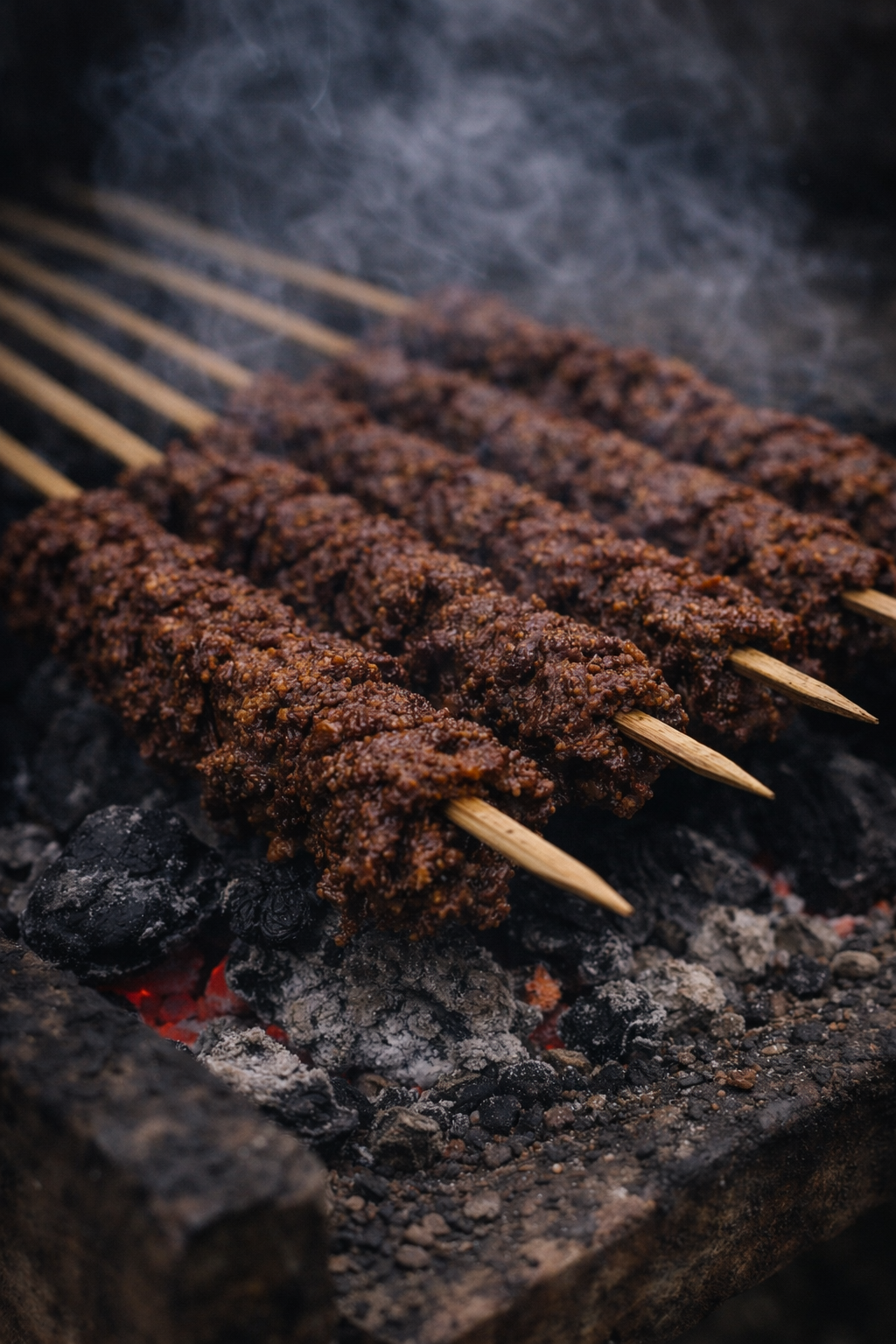
Traditional Nigerian beef suya grilled over charcoal and coated in dry peanut-based yaji.
Suya is a West African grilled meat tradition, most closely associated with Northern Nigeria, where its techniques, spice profile, and cultural role were refined over generations.
At its core, suya is thinly sliced meat, threaded onto skewers, coated in a dry, peanut-forward spice blend, and grilled over open charcoal. But suya is more than a recipe. It is a street food culture, a method of seasoning and grilling, and a social ritual tied to evenings, travel, and informal gathering.
Suya Standard exists to define what suya is — and just as importantly, what it is not.
The Origins of Suya
Suya developed in Northern Nigeria among Hausa-speaking communities, where cattle herding, spice trading, and open-fire cooking converged into something distinct.
The Hausa were pastoral people with ready access to beef from their herds. As trans-Sahelian trade routes brought groundnuts (peanuts) northward from West Africa and spices such as ginger and chilli across the Sahel, grillers developed yaji — a dry spice blend built on peanuts rather than wet marinades.
This approach was practical. Yaji could be applied immediately, travelled well, and suited roadside cooking without refrigeration. Combined with open charcoal grills, it allowed meat to be seasoned, cooked, and sold quickly. What began as a functional grilling method at cattle markets evolved into a street-food culture that spread southward across Nigeria and outward through migration, becoming one of the most recognisable West African foods globally.
What Makes Suya Distinct
| Suya | Generic Kebab |
|---|---|
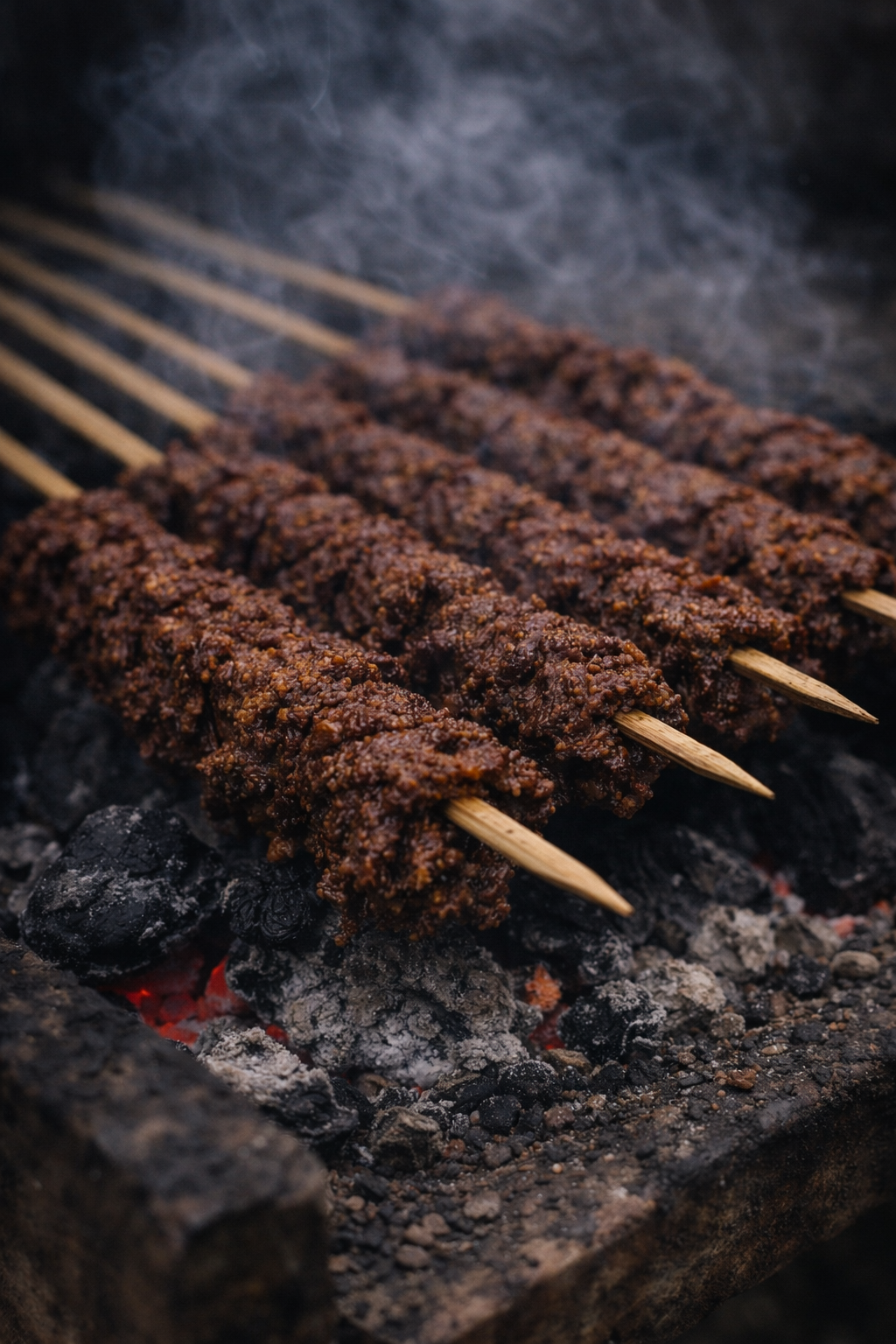 | 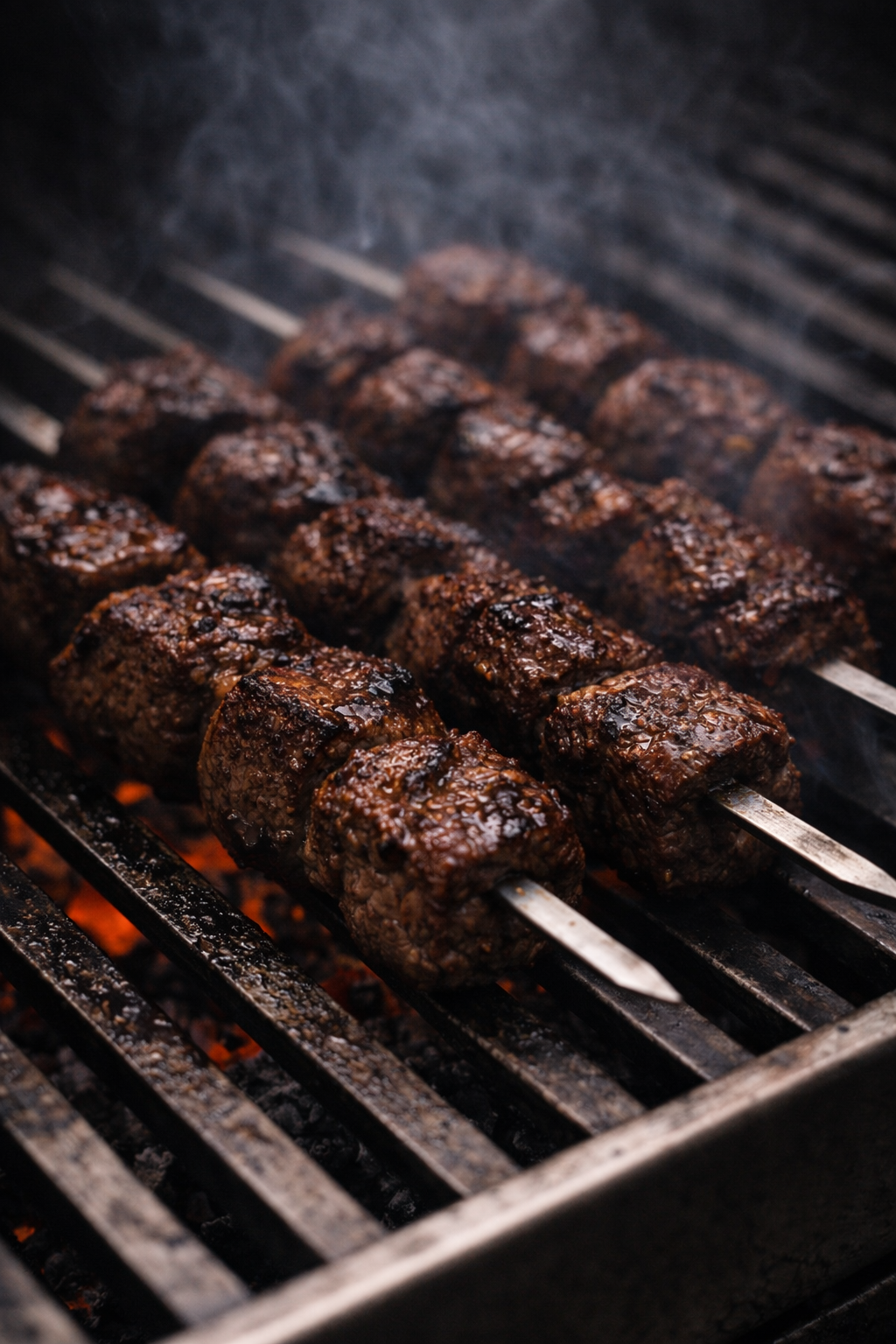 |
Suya is defined by dry spicing and ribbon-thin slicing. Kebab relies on wet marinades and chunked meat.
Suya is often described loosely as an “African kebab,” but this comparison is misleading. While skewers are involved, suya is defined by its seasoning system, slicing method, and grilling technique — not its shape.
Kebabs typically rely on wet marinades that penetrate the meat before cooking. Suya works differently: its spice is applied as a dry coating that forms a crust during grilling. The extremely thin slicing maximises surface contact between meat, spice, and fire, creating a texture and flavour profile that marinades cannot replicate.
The Spice (Yaji)
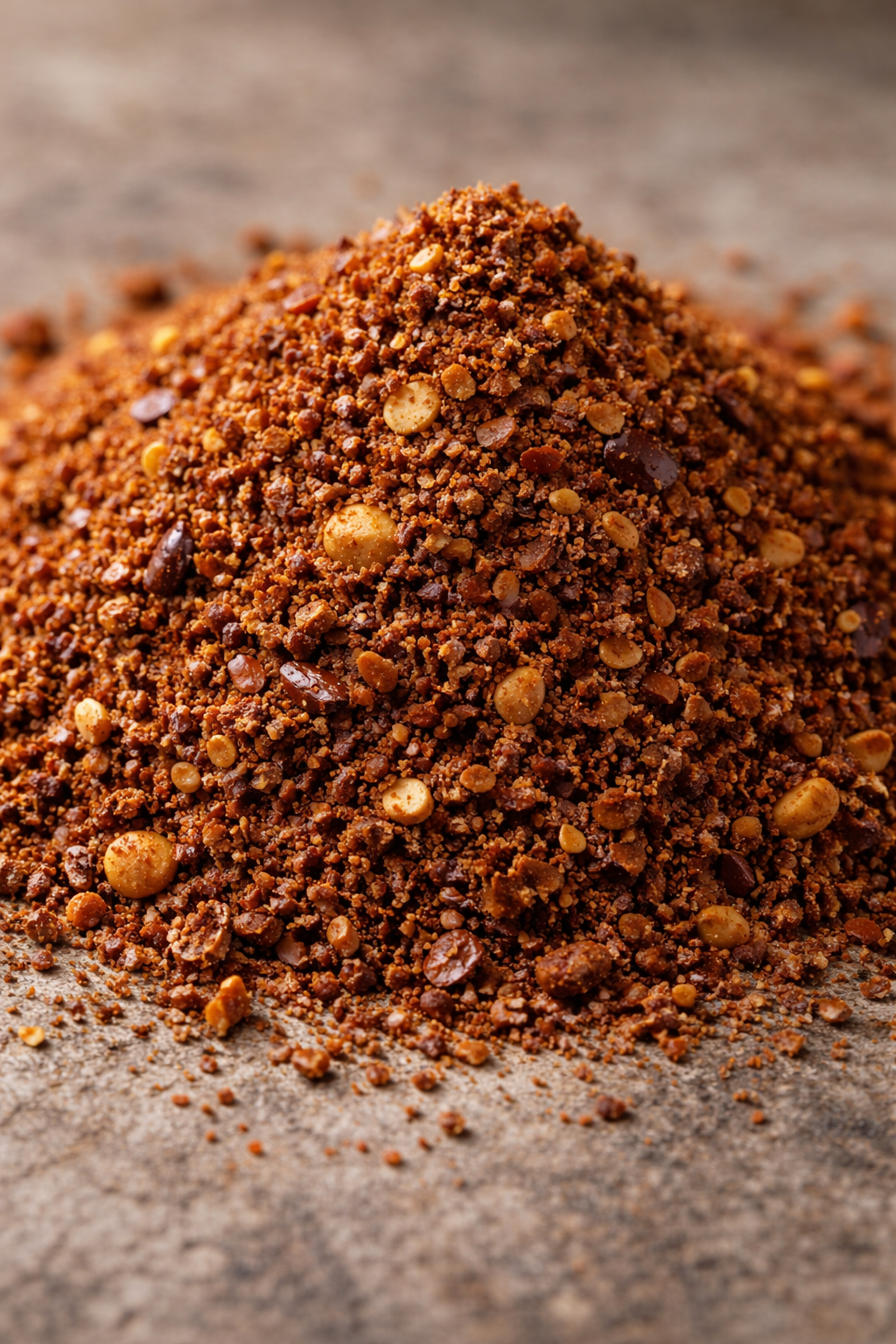
Yaji is a dry, peanut-based spice blend applied as a coating — not a marinade.
Suya is seasoned with yaji, a dry spice blend typically containing peanuts (often in the form of kuli-kuli), chilli pepper, ginger, garlic, and salt. Exact ratios vary by region and vendor, but peanuts are essential.
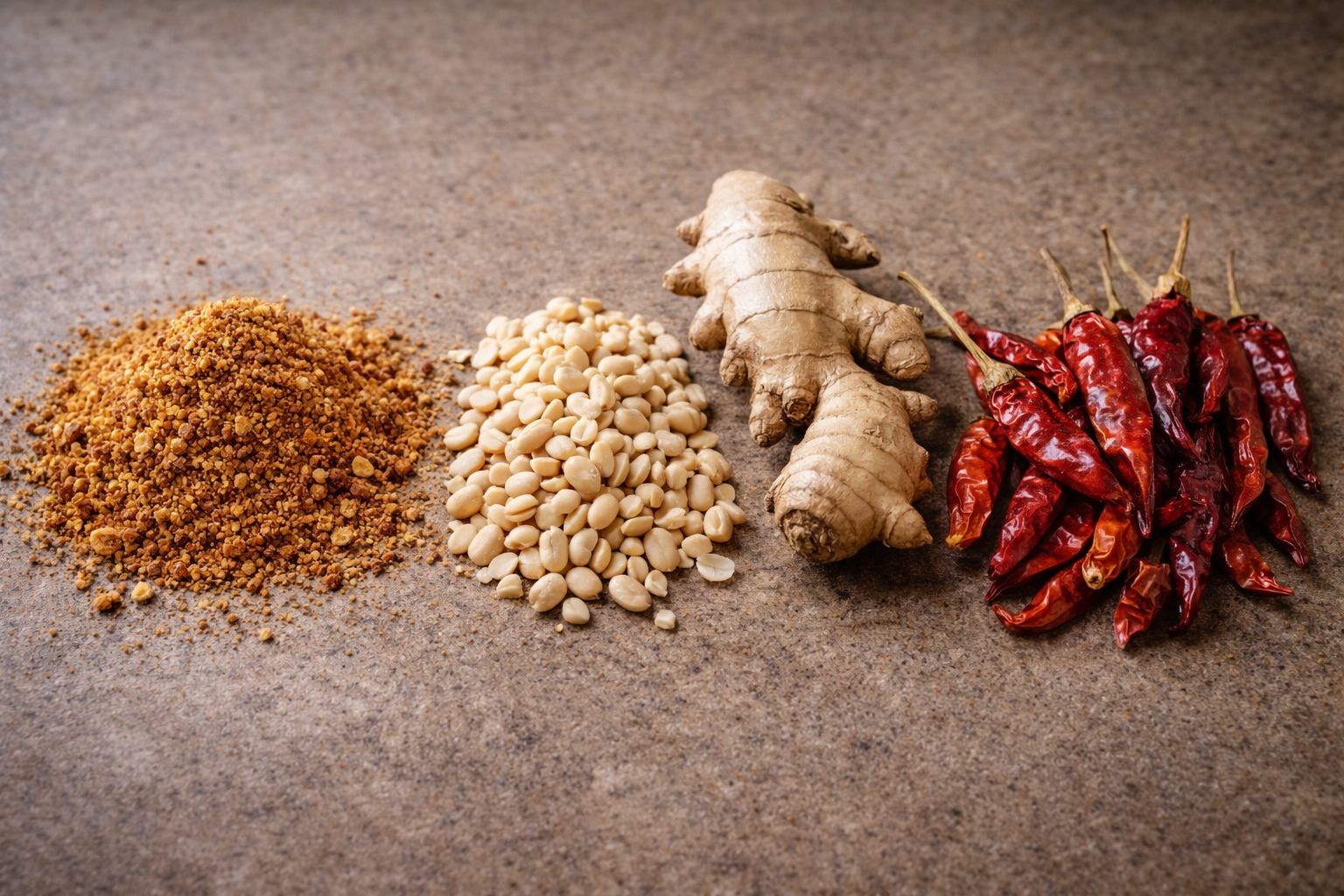
Peanuts are essential to yaji. Without them, it is not suya.
The Cut
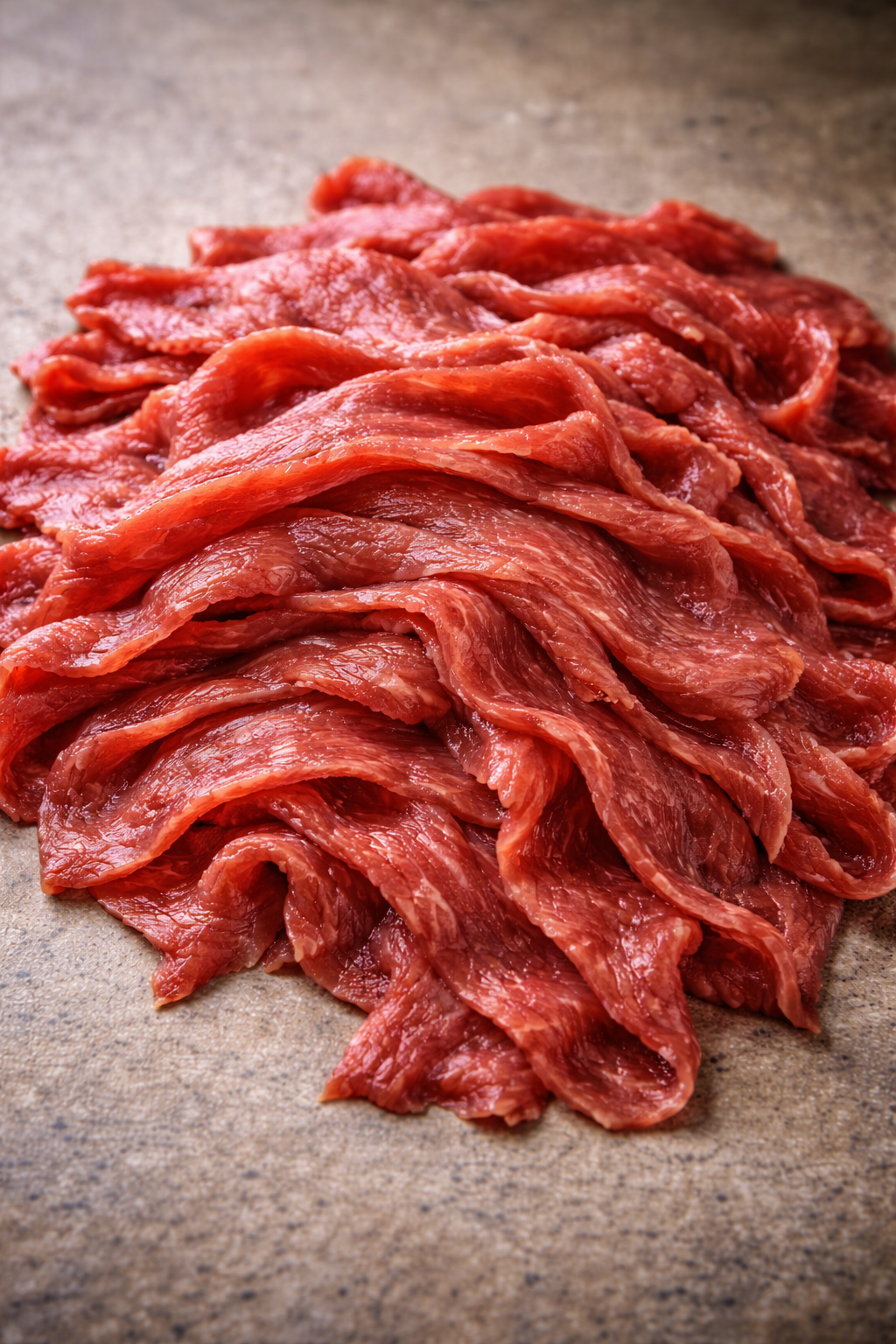
Traditional suya uses ribbon-thin slices to maximise contact between meat, spice, and fire.
Traditional suya uses very thin slices of meat, usually beef, laid flat or ribboned along the skewer. This slicing style is non-negotiable. It allows rapid cooking over high heat and produces crisp edges with a tender interior. Chicken and offal variations follow the same slicing logic.
The Grill
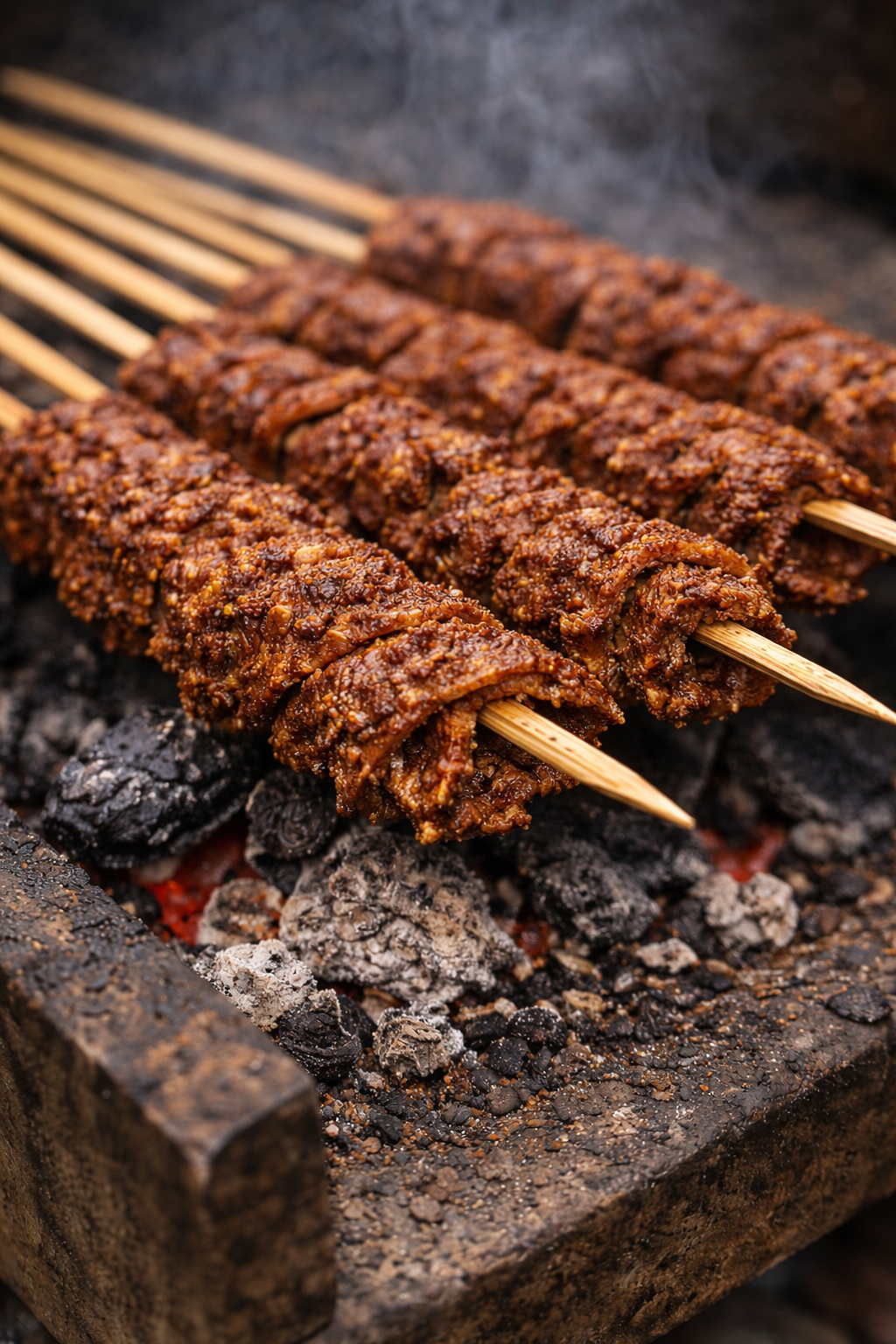
Suya is cooked over open charcoal and turned frequently to build a spiced crust.
Suya is cooked over charcoal, typically on narrow, open grills. The meat is turned frequently and brushed lightly with oil during cooking to prevent burning and encourage charring. This technique is essential to suya’s flavour and texture.
Suya as a Cultural Practice
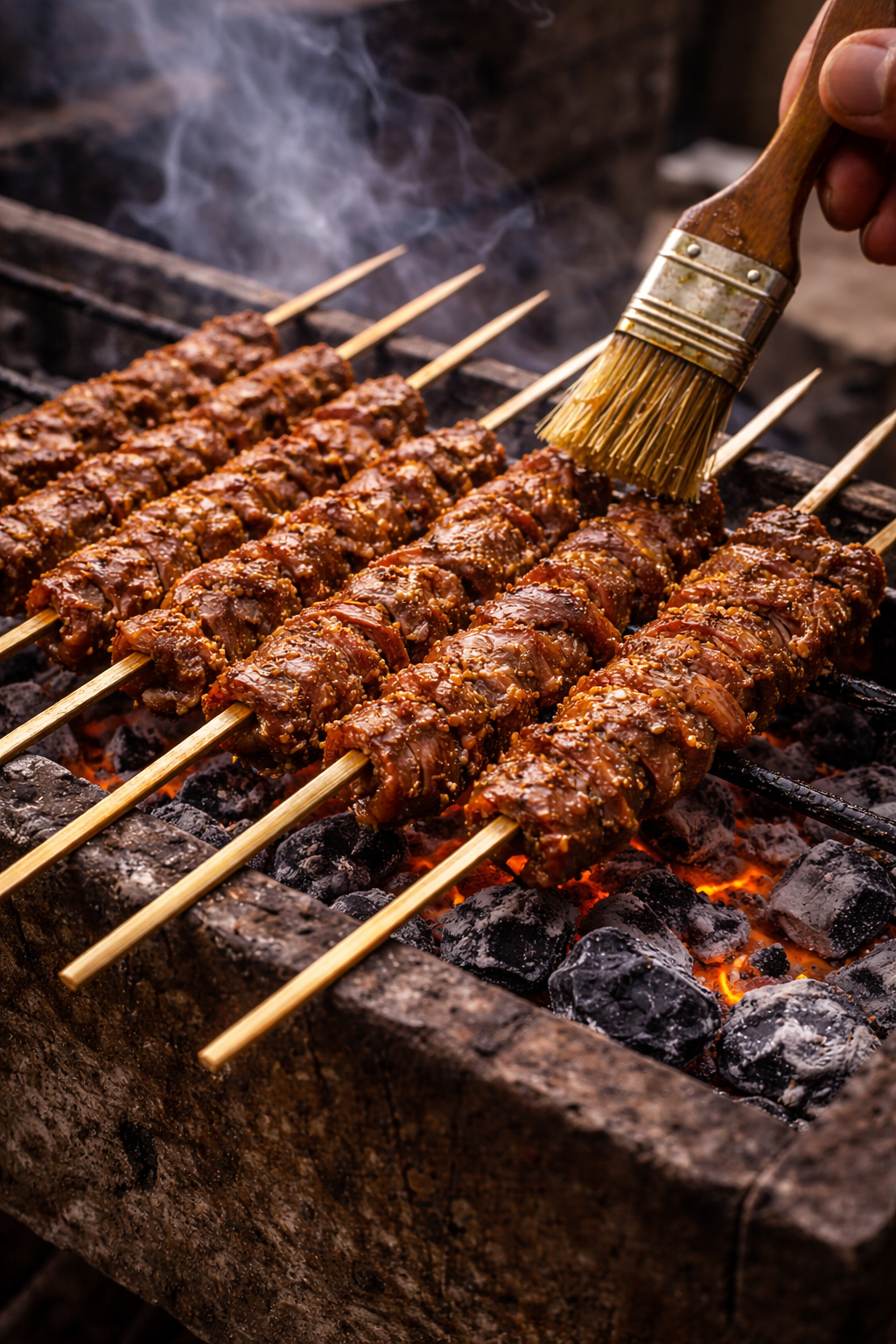
Suya is traditionally eaten in the evening at roadside grills, shared informally and eaten standing.
Suya is traditionally eaten in the evening or late at night, by the roadside or at informal stalls (mai suya). Customers stand nearby, share skewers, and eat communally. It is often accompanied by sliced onions, fresh tomatoes, and extra dry pepper.
Suya is not typically plated, garnished, or formalised. Its identity is tied to accessibility, immediacy, and informality.
What Suya Is Not
Suya is not a generic grilled meat skewer, a marinated kebab with wet sauces, shish, shawarma, satay, or any grilled meat simply dusted with chilli after cooking.
If the peanut-based dry spice system, the ribbon-thin slicing method, and the charcoal-grilling technique are absent, it may still be good food — but it is not suya.
Why Standards Matter
As suya gains global visibility, it risks being diluted into a vague category of “spicy grilled meat.”
Standards are not about gatekeeping for its own sake. They are about preservation through clarity: protecting cultural meaning, helping diners know what to expect, and giving vendors a shared understanding of quality.
Suya is specific. Suya is deliberate. Suya is not generic.
This is the standard.