Michelin stars freeze a moment. Suya standards evolve nightly.
There is no Michelin Guide for suya, and there never will be.
Not because suya lacks quality.
Not because it lacks craft.
But because Michelin cannot measure what suya is.
Michelin was built to evaluate restaurants. Suya exists outside that system entirely.
A Brief Michelin Primer (So We Know What We’re Rejecting)
The Michelin Guide started in 1900 as a French tyre company’s marketing gimmick—literally a free booklet to encourage people to drive more and wear out their tyres faster. It listed petrol stations, mechanics, and eventually, restaurants worth the journey.
By the 1920s, Michelin started charging for the guide and introduced its star system:
- One star: “A very good restaurant in its category”
- Two stars: “Excellent cooking, worth a detour”
- Three stars: “Exceptional cuisine, worth a special journey”
Today, Michelin inspectors visit anonymously, multiple times, and judge restaurants on five criteria:
- Quality of ingredients
- Mastery of cooking techniques
- Harmony of flavours
- Personality of the chef in the cuisine
- Consistency across visits and across the menu
Notice what’s missing: context.
Michelin doesn’t care if you’re cooking in a storm. Doesn’t care if the meat shipment came late. Doesn’t care if your charcoal supplier sent you dust instead of hardwood.
Michelin measures output in a vacuum.
Suya is defined by how you respond when the vacuum breaks.
Michelin Measures Control. Suya Thrives on Exposure.
Michelin’s entire logic rests on control:
- Controlled kitchens
- Controlled temperatures
- Controlled supply chains
- Controlled service environments
- Controlled consistency across visits
Walk into a Michelin-starred restaurant and you’ll find climate-controlled wine cellars, sous-vide baths holding water at 58.3°C, and cooks using timers that beep every 90 seconds.
Suya is the opposite.
Suya is exposed to:
- Wind (which changes how charcoal burns)
- Weather (humidity affects yaji adhesion)
- Variable charcoal quality (some batches are just bad)
- Evening foot traffic (crowds change pacing)
- Real-time human judgment (no timers, no thermometers)
This is not a flaw. It is the point.
A Michelin kitchen eliminates variables.
A suya grill reveals who can handle them.
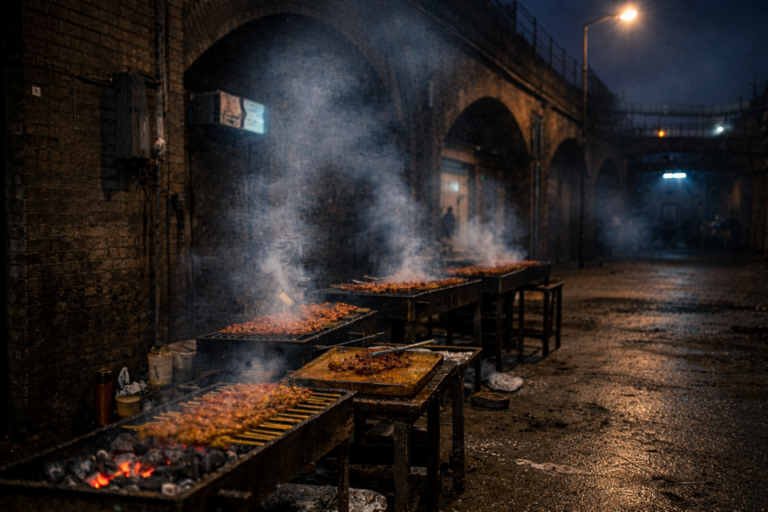
The best suya vendors aren’t the ones working in perfect conditions. They’re the ones who make it look perfect when conditions are terrible—charcoal half-dead, wind scattering smoke, queue stretching down the block, and it’s 9:45pm on a Tuesday.
Michelin rewards control.
Suya rewards adaptation under pressure.
You cannot audit that with a clipboard.
Michelin Requires Repeatability. Suya Accepts Variation.
Michelin inspectors return anonymously and expect the same experience every time. Same dish. Same presentation. Same flavor balance.
This makes sense for plated food. Less sense for live-fire cooking in open air.
Suya does not promise sameness. It promises correctness within variation.
Charcoal burns differently every night.
Meat arrives with different fat ratios.
Humidity changes how yaji clings.
Saturday crowds move differently than Tuesday crowds.
A good suya vendor adjusts instinctively:
- More heat here
- Less time there
- Different skewer spacing
- Faster turnover when the queue spikes
This isn’t inconsistency. It’s adaptive mastery.
Michelin inspectors would call this “unreliable.”
Suya customers call it Tuesday.
And here’s the thing Michelin cannot score: the vendor who consistently delivers excellent suya despite changing conditions is demonstrating far more skill than the chef working with immersion circulators and digital scales.
But you can’t measure instinct.
You can only recognize it after eating the same vendor’s suya for six months straight and realizing it’s never been off—despite the wind, the rain, the charcoal, the crowd, the rush.
Michelin cannot score that kind of consistency because it doesn’t fit the rubric.
Michelin Needs Formal Boundaries. Suya Lives in the Gaps.
Michelin assumes:
- A defined dining room
- Clear service roles
- A seated customer
- A plated dish
- A beginning and an end
Suya ignores all of this.
You eat standing. You eat late. You eat repeatedly. You eat with your hands. You may not even stop walking.
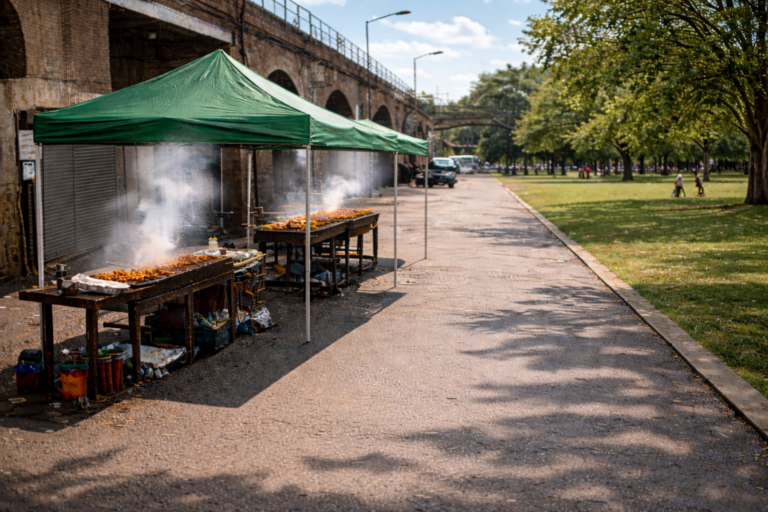
Suya does not begin when the plate arrives—it begins when the smoke reaches you from down the street.
This is not romantic exaggeration. Smoke is functional. It is how you know:
- Charcoal is lit (not gas)
- Fat is rendering (meat is fresh, not pre-cooked)
- Yaji is blooming (spices are dry, not wet paste)
Michelin cannot score smell as navigation.
But smell is the first quality check. If you can’t smell suya from 20 meters away, something structural is already wrong.
How do you write that in a guide?
“Aroma propagation: 4/5 stars”?
Michelin Rewards Documentation. Suya Is Transmitted Orally.
Michelin values written menus, formal recipes, standardized techniques, documented processes. The kind of thing you can audit, reproduce, teach in culinary school.
Suya knowledge is not written down.
It is:
- Watched
- Repeated
- Corrected
- Absorbed
A suya grillman learns by standing next to someone better than him. Mistakes are immediate. Failure is public.
There is no training manual. There is no certificate. Only competence or exposure.
Ask a suya vendor “How long do you grill each skewer?” and the answer is never a number. It’s:
“Until it’s ready.”
Which sounds evasive until you realize they’re reading:
- Charcoal color
- Fat drip rate
- Spice bloom
- Meat flex on the skewer
None of which appears in a recipe.
Michelin inspectors need documentation to verify technique.
Suya vendors need eyes, hands, and years.
You cannot audit lineage.
Michelin Is Centralized. Suya Is Collective.
Here’s where it gets interesting.
Michelin stars are awarded to places. One restaurant. One chef. One kitchen.
Suya quality is enforced by ecosystems.
In real suya hotspots—Peckham, Deptford, parts of Birmingham—quality isn’t maintained by inspectors. It’s maintained by proximity.
In clusters:
- Vendors watch each other
- Customers compare immediately
- Shortcuts are punished instantly
- Poor technique does not survive next to better technique
One suya vendor alone proves nothing. Three within walking distance reveals everything.
This is why Peckham matters—not because of one legendary vendor, but because seven mediocre ones cannot survive next to three good ones.
Michelin crowns individuals.
Suya survives through competition.
Density replaces inspectors.
Repetition replaces stars.
And here’s the uncomfortable truth: this system works better.
Michelin visits once, maybe twice a year.
Suya customers visit weekly and talk.
Michelin inspectors are sworn to secrecy.
Suya customers are aggressively vocal.
Which enforcement mechanism would you trust?
The Hard Truth
If Michelin ever tried to rate suya, one of two things would happen:
1. They would sanitize it to fit their framework
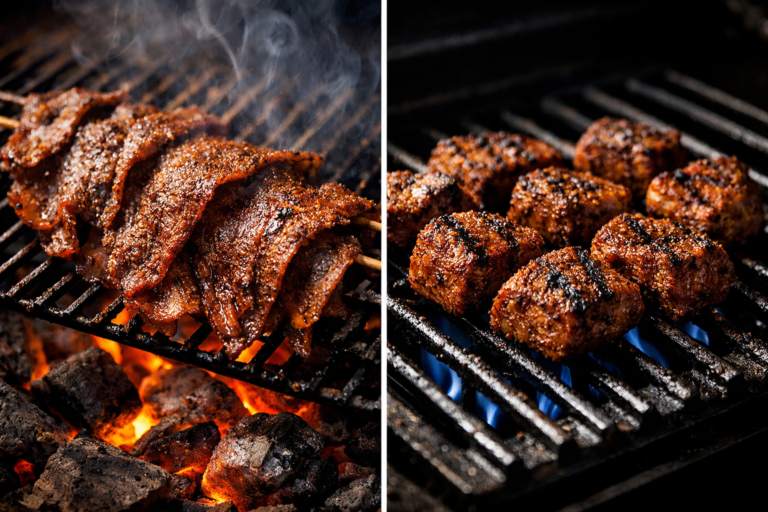
Gas grills (controllable heat).
Indoor kitchens (consistent temperature).
Pre-portioned cuts (repeatability).
Written spice ratios (documentation).
The result would technically be “suya”—but it would be neutered. Stripped of the variables that make it what it is.
2. They would misunderstand it entirely
Inspectors would penalize:
- Outdoor cooking (health and safety)
- Inconsistent portion sizes (lack of standardization)
- No seating (informal service)
- Variable spice levels (unreliable experience)
They would reward the wrong things—presentation over smoke, plating over crust, ambiance over competence.
Either way, the food would lose.
Suya does not need prestige. It needs conditions.
And Michelin cannot certify conditions it does not control.
So What Replaces Michelin for Suya?
Suya does not lack standards. It lacks formal ones.
The replacement for Michelin already exists. It is just not written down.
1. Proximity Is the First Judge
The most reliable indicator of suya quality is distance to competitors.
- One suya vendor alone proves nothing
- Three within walking distance reveals everything
In clusters, excuses disappear. Customers compare. Technique is exposed nightly.
A vendor who survives next to competitors is already vetted.
2. Evening Consistency Is the Second Judge
Anyone can cook good suya at 3pm for Instagram.
Only real vendors can do it at 9:30pm with a queue, smoke in their eyes, and charcoal half-spent.
Michelin visits once or twice a year.
Suya is judged every single night.
3. Smoke Is the Third Judge
If you cannot smell suya from distance, something is wrong:
- Charcoal is weak
- Fat is not igniting
- Spice is not blooming
Smoke is not atmosphere. Smoke is data.
4. Customer Behavior Is the Fourth Judge
Watch the customers.
Do they order without asking questions?
Do they argue over spice levels?
Do they compare vendors openly?
Do they return weekly?
In real suya environments, nobody asks what yaji is. Knowledge is assumed.
Explanation is a sign of dilution.
5. Technique Transparency Is the Fifth Judge
Good vendors do not hide:
- Dry yaji
- Thin cuts
- Charcoal grills
- Manual slicing
Bad vendors obscure with wet marinades, gas grills, thick cuts, pre-cooked meat.
Visibility replaces certification.
6. Failure Rate Is the Final Judge
In Michelin systems, failure is rare because barriers are high.
In suya systems, failure is common—and necessary.
Vendors open. Standards are tested. Weak operations close. Strong ones remain.
This churn maintains quality better than awards ever could.
High failure rate is not instability. It is enforcement.
The Suya Standard Is Not a Guide. It Is a Filter.
Suya does not need stars on walls. It needs pressure in the street.
The true replacement for Michelin is:
- Density
- Repetition
- Visibility
- Competition
- Time
When all five exist, quality enforces itself.
Suya is not evaluated by outsiders. It is corrected by its own ecosystem.
That is why no Michelin Guide exists for suya.
And why none is needed.